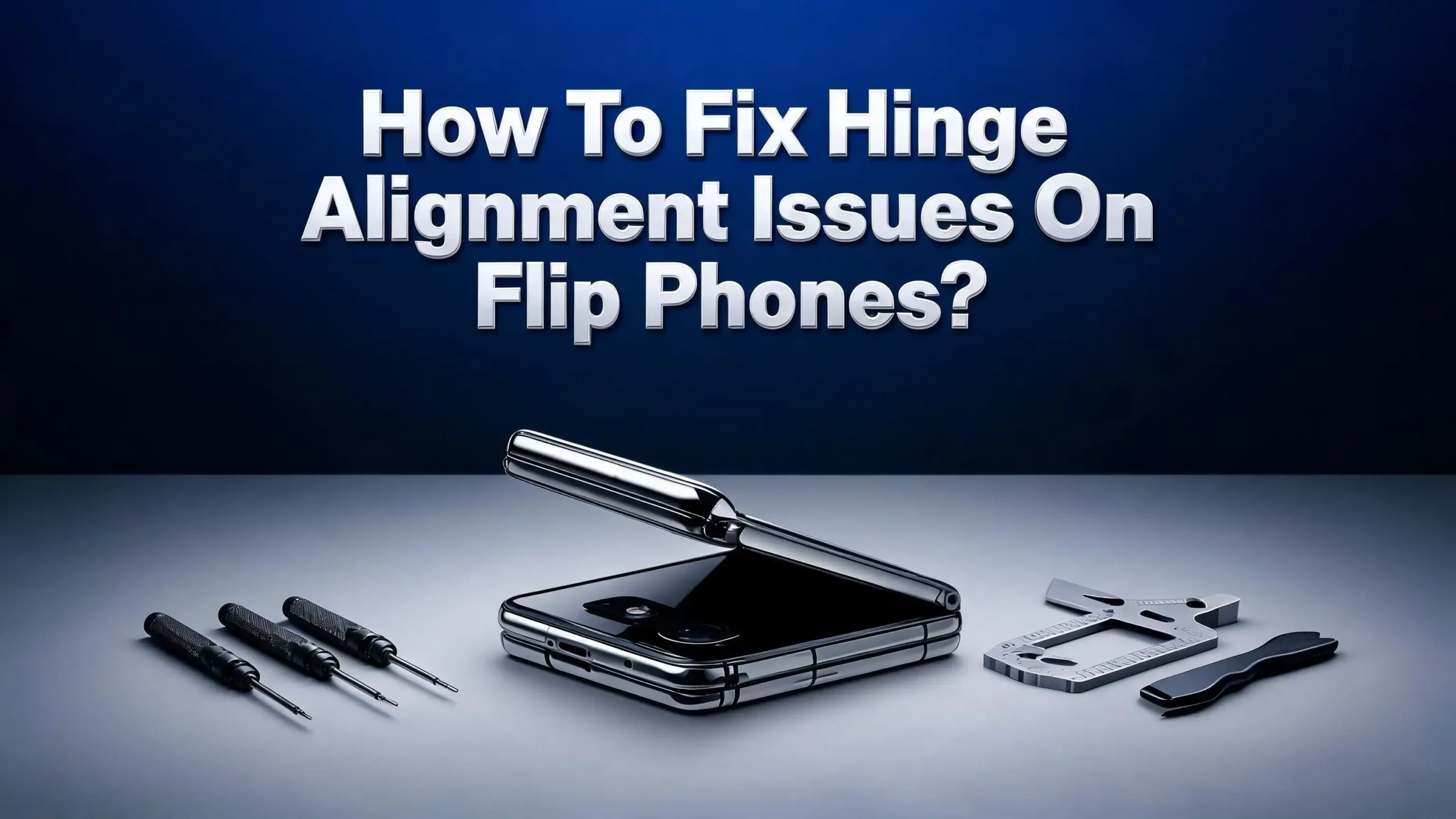
How To Fix Hinge Alignment Issues On Flip Phones?
Flip phones are back in a big way. Samsung Galaxy Z Flip, Motorola Razr, and other foldable devices offer a fresh take on smartphone design. But there is one problem that keeps showing up for users everywhere: hinge alignment issues.
The good news is that many hinge alignment issues can be fixed at home with the right knowledge. Some need professional help, and knowing the difference can save you both time and money.
This guide walks you through every practical solution for fixing hinge alignment issues on flip phones. You will learn what causes these problems, how to diagnose them, and exactly what steps to take.
Key Takeaways
- Hinge alignment issues are common in foldable phones and can result from dust buildup, drops, mechanical wear, or manufacturing defects. Catching the problem early often prevents expensive repairs down the road.
- Cleaning the hinge area with compressed air is one of the simplest and most effective first steps. Dust and debris are the most frequent culprits behind stiff, misaligned, or noisy hinges.
- Never force a misaligned hinge open or closed. Applying excessive pressure can damage the flexible display, snap internal components, or worsen the misalignment. Always use gentle movements.
- Software diagnostics can help identify hinge problems on some devices. Samsung phones offer built-in diagnostic tools under Settings that can test hinge function and detect calibration issues.
- Professional repair is the safest choice for serious misalignment. If your phone has visible gaps, uneven halves, or grinding sounds, a certified technician with the right tools should handle the repair.
- Warranty coverage varies by manufacturer and cause. Manufacturing defects are usually covered, but damage from drops or dust intrusion may not be. Always check your warranty terms before paying for a repair out of pocket.
What Causes Hinge Alignment Issues On Flip Phones
Flip phone hinges are some of the most complex mechanical systems inside any modern device. They use micro gears, tension bars, lubricated pivots, and cam mechanisms to let you fold and unfold your phone thousands of times. This complexity means that several things can go wrong.
Dust and debris are the most common cause. Tiny particles of sand, lint, or dirt can work their way into the hinge cavity over time. Once inside, they grind against metal joints and push components out of alignment. Samsung has improved dust resistance in newer models, but no foldable phone is completely sealed.
Drops and impacts are another major cause. Even a short fall onto a hard surface can shift internal hinge brackets. The phone may look fine on the outside, but the internal alignment can be off by just enough to cause problems. You might notice that the two halves no longer sit flush when the device is closed.
Normal wear and tear also plays a role. Foldable phone hinges are rated for a certain number of folds, often around 200,000. Over time, the internal springs can lose elasticity and the lubrication can dry out. This leads to stiffness, uneven folding motion, and gradual misalignment.
Finally, manufacturing defects can cause alignment issues right out of the box. Some users report slight misalignment on brand new devices. If your phone arrived with uneven halves or a gap, it is likely a factory issue.
How To Identify Hinge Misalignment On Your Flip Phone
Before you attempt any fix, you need to confirm that your flip phone actually has a hinge alignment issue. Some symptoms look similar but have different root causes. A proper diagnosis saves you from making the wrong repair.
Close your phone completely and look at it from the side. Both halves should sit perfectly flush against each other. If one side is raised or if you see a visible gap between the two halves, you have a misalignment problem. Take a photo for reference so you can track whether the issue gets worse over time.
Open and close the phone slowly several times. Pay attention to how the hinge feels. A properly aligned hinge should move smoothly with consistent resistance throughout the full range of motion. If you feel grinding, clicking, or uneven resistance, the hinge is likely out of alignment.
Check the screen crease area. An uneven hinge can cause the flexible display to sit unevenly along the fold line. If you notice that the crease has deepened on one side or the screen looks slightly warped, the hinge may be pulling the display unevenly.
Use your phone’s built in diagnostic tools if available. On Samsung Galaxy Z Flip devices, go to Settings, then Device Care, then Diagnostics. Run the fold test to check hinge calibration. This software check can sometimes detect issues that are hard to spot with the naked eye.
Write down all the symptoms you observe. This information is useful whether you fix the phone yourself or take it to a repair shop.
Cleaning The Hinge Area To Restore Alignment
Dust and debris removal is the first fix you should always try. It is the least invasive method and solves the problem in many cases. Small particles trapped in the hinge cavity can push components out of position and cause misalignment.
Start with a can of compressed air. Hold the phone slightly open at a 90 degree angle. Direct short bursts of air into the hinge gap from both sides. Do not hold the nozzle too close to the phone. Keep it about two inches away to avoid pushing debris deeper inside. Use quick, controlled bursts rather than one long stream.
Follow up with a soft bristle brush. A clean, dry toothbrush or a dedicated electronics cleaning brush works well. Gently brush along the hinge seam to dislodge any particles that the compressed air missed. Brush in one direction rather than back and forth to push debris out instead of around.
Wipe the hinge area with a dry microfiber cloth. Never use water, cleaning sprays, or any liquid on the hinge. Moisture can corrode internal metal parts and cause even bigger problems. Samsung’s official care guidelines specifically warn against applying liquid directly onto the hinge.
Pros of this method: It is free, easy to do at home, and does not void your warranty. It works well for minor alignment issues caused by dust.
Cons of this method: It will not fix alignment problems caused by drops, internal damage, or worn components. If the misalignment is structural, cleaning alone will not solve it.
After cleaning, open and close the phone several times to see if the movement has improved. Many users report that a simple cleaning restores smooth, even folding.
Gently Adjusting A Minor Misalignment By Hand
If cleaning did not solve the issue and the misalignment is very slight, you can try a gentle manual adjustment. This method requires a careful touch and should only be used for very minor cases where one half sits slightly higher than the other when closed.
Hold the phone closed in both hands. Place your thumbs on the top edges of each half. Apply gentle, even pressure on the side that sits higher. Do not push hard or jerk the phone. The goal is to guide the halves back into alignment with slow, steady pressure. Some users on Samsung community forums have reported success by pressing down gently on the raised side of the hinge.
Test the phone after each small adjustment. Open and close it fully a few times. Check from the side again to see if the gap has reduced. If you see improvement, repeat the process with the same gentle pressure until both halves sit flush.
Stop immediately if you hear cracking sounds or feel unusual resistance. These are signs that internal components are under stress, and continuing could damage the flexible display or break hinge brackets.
Pros of this method: It can fix very minor misalignment without tools or cost. It takes only a few minutes.
Cons of this method: It carries a risk of making the problem worse if done with too much force. It is not suitable for moderate or severe misalignment. It may void your warranty if internal damage results.
This approach works best as a temporary measure. If you find yourself needing to readjust the hinge frequently, the underlying cause has not been resolved.
Using Software Diagnostics To Check Hinge Calibration
Modern foldable phones include software features that interact with the hinge sensor. A software glitch can sometimes cause the phone to behave as if the hinge is misaligned even when the physical hinge is fine. Running software diagnostics can help you rule this out.
On Samsung Galaxy Z Flip devices, open Settings and go to Device Care. Select Diagnostics and look for a fold test or hinge test option. This test moves through the full range of hinge positions and checks sensor readings. If the test reports an error, a software update or reset may fix the problem.
Check for available software updates. Go to Settings, then Software Update, then Download and Install. Samsung regularly pushes updates that improve hinge sensor calibration and Flex Mode performance. An outdated firmware version can cause the phone to misread hinge position data.
Restart your phone as a basic step. A simple reboot clears temporary software glitches that may affect hinge related features. Hold the power button, select Restart, and test the hinge again after the phone powers back on.
As a last resort, perform a factory reset. Back up all your data first. Go to Settings, then General Management, then Reset, then Factory Data Reset. This wipes all settings and returns the software to its original state. Some users have found that persistent hinge sensor issues disappeared after a factory reset.
Pros of this method: It is risk free and does not involve touching the hinge physically. It is effective for software related hinge behavior issues.
Cons of this method: It will not fix any physical misalignment. A factory reset erases all your data if you do not back up first.
When To Use A Professional Repair Service
Some hinge alignment issues go beyond what you can fix at home. Knowing when to hand the job over to a professional can save you from turning a small problem into an expensive one. Foldable phone hinges contain dozens of tiny parts that require specialized tools and training to service properly.
Seek professional help if you see a visible gap between the two halves that does not close with gentle pressure. This usually means that an internal bracket is bent or a hinge component has shifted out of its housing. No amount of cleaning or pressing will fix a structural problem like this.
Grinding or crunching sounds during folding are another clear sign. These sounds indicate that metal parts are scraping against each other in an unintended way. Continuing to use the phone in this state can damage the flexible OLED display, which is far more expensive to replace than the hinge itself.
If the phone will not open past a certain angle or feels stuck at any point in the fold, stop using it and get it checked. Forcing a stuck hinge is one of the fastest ways to crack an inner display. Technicians use precision tools and measurement software to diagnose exactly what is wrong and calibrate the hinge after repair.
Professional repair costs vary based on the extent of damage and the phone model. Hinge repair typically ranges from $100 to $300 depending on whether parts need replacement. Full hinge assembly replacement costs more but restores the phone to factory condition.
Pros of professional repair: Accurate diagnosis, proper tools, genuine parts, and calibrated results. Most reputable shops offer a repair warranty.
Cons of professional repair: Higher cost than DIY methods. You may need to be without your phone for a day or more.
Understanding Your Warranty Coverage For Hinge Issues
Before you spend money on any repair, check your warranty status. Many hinge alignment issues fall under manufacturer warranty if they result from a defect rather than user damage. This can save you the full cost of repair.
Samsung offers a one year limited warranty on all Galaxy Z Flip devices. This warranty covers manufacturing defects, which includes hinge misalignment that appears without any user caused damage. If your phone arrived with alignment issues or developed them under normal use, Samsung should repair it at no cost.
Samsung Care Plus and similar extended plans offer broader coverage. These plans often cover accidental damage, including drops that can cause hinge misalignment. Check whether you purchased an extended protection plan when you bought your phone. The coverage details vary by region and plan level, so read the fine print.
Motorola provides a one year limited warranty for its Razr foldable phones. Similar to Samsung, this covers defects in materials and workmanship. Hinge problems caused by normal use should be covered.
Be aware of what voids your warranty. Opening the phone yourself, using unauthorized repair services, or applying aftermarket adhesives or lubricants to the hinge can all void your coverage. Water damage and physical damage from drops are typically not covered under standard warranty.
To file a warranty claim, contact the manufacturer’s support line or visit an authorized service center. Bring your proof of purchase and describe the issue clearly. Take photos and videos of the misalignment before your visit to document the problem.
Common Mistakes That Make Hinge Alignment Worse
Many flip phone owners accidentally make their hinge problems worse by trying incorrect fixes. Avoiding these mistakes is just as important as knowing the right solutions. One wrong move can turn a minor issue into a display replacement.
Forcing the hinge open or closed is the number one mistake. When a hinge feels stiff or does not close flat, the natural reaction is to push harder. This can snap internal tension springs, bend hinge brackets, or crack the flexible OLED panel. Always use gentle, controlled movements when handling a problematic hinge.
Using WD 40 or household lubricants is another common error. Generic oils and sprays are not designed for the precision mechanisms inside foldable phones. They can attract more dust, gum up the micro gears, and corrode delicate metal parts. Only lubricants specifically made for foldable device hinges should ever be used, and ideally only by a trained technician.
Attempting to disassemble the hinge at home without proper tools or experience almost always ends badly. Foldable phones have layered constructions with flex cables running through the hinge area. Disconnecting or damaging these cables can cause the display to flicker, go black, or stop responding to touch entirely.
Ignoring early warning signs is a slow motion mistake. A slight clicking sound or a minor gap might seem insignificant, but these small symptoms tend to get worse over time. Addressing alignment issues early is far cheaper and easier than waiting until the hinge fails completely.
Exposing the phone to sand, dirt, or moisture while the hinge is already compromised accelerates the damage. Keep your phone in a clean, dry environment until you resolve the alignment issue.
How To Prevent Hinge Alignment Issues In The Future
Prevention is far easier and cheaper than repair. A few simple habits can keep your flip phone hinge working smoothly for years. Most alignment issues are preventable with consistent care.
Fold and unfold your phone with one smooth motion. Avoid stopping midway or changing direction while folding. Each time you fold, let the hinge move through its full range naturally. Do not slam the phone shut like an old style flip phone. Modern foldable displays need a gentler touch.
Keep the hinge area clean on a regular basis. Use a soft brush or compressed air once a week to clear away dust and lint. This is especially important if you carry your phone in a pocket or bag where debris can accumulate. A quick weekly cleaning takes less than a minute and can prevent months of problems.
Use a protective case designed for your specific phone model. Good cases protect the hinge from minor impacts without adding pressure to the fold mechanism. Avoid cases that are too tight around the hinge, as they can restrict movement and cause uneven wear.
Avoid using your flip phone in dusty or sandy environments. Beach trips, construction sites, and windy outdoor settings expose the hinge to particles that can cause damage. If you must use your phone in these conditions, keep it open or closed rather than at a partial angle where the hinge gap is exposed.
Store your phone on a flat, clean surface when you are not using it. Placing a foldable phone on uneven surfaces or stacking objects on top of it can put uneven pressure on the hinge over time.
Schedule a professional cleaning every six to twelve months. A technician can inspect the hinge for early signs of wear and clean areas you cannot reach at home.
Repair Costs And What To Expect From Different Solutions
Understanding the cost of each fix helps you make an informed decision. Prices vary widely based on the phone model, the severity of the issue, and whether you use manufacturer service or a third party shop.
DIY cleaning costs almost nothing. A can of compressed air costs a few dollars, and you likely already own a soft brush and microfiber cloth. This is the best starting point for minor alignment issues caused by dust. The only investment is your time.
Software troubleshooting is completely free. Running diagnostics, updating firmware, and performing a restart cost nothing. These steps should always be part of your initial troubleshooting process.
Third party repair shops typically charge between $80 and $250 for hinge alignment and repair on foldable phones. The price depends on whether the hinge needs cleaning, realignment, lubrication, or full replacement. Ask the shop if they use genuine manufacturer parts before agreeing to any repair.
Manufacturer authorized service centers tend to charge more, often between $150 and $400 for hinge work. However, they use original parts and the repair is performed by trained technicians. Repairs done at authorized centers also preserve your remaining warranty coverage.
Full hinge assembly replacement is the most expensive option, sometimes reaching $300 to $500 or more. This is necessary when the hinge mechanism is physically broken or severely damaged. The cost includes the part, labor, and calibration.
Pros of DIY approaches: Low or zero cost. Immediate. No need to hand over your phone.
Cons of DIY approaches: Limited to minor issues. Risk of causing further damage if done incorrectly.
Pros of professional repair: Thorough, accurate, and backed by a service warranty. Handles all levels of damage.
Cons of professional repair: Higher cost and potential wait time.
Specific Tips For Samsung Galaxy Z Flip Hinge Alignment
Samsung’s Galaxy Z Flip series is the most popular foldable flip phone on the market, so it deserves some model specific advice. Samsung uses a proprietary Hideaway Hinge with a sweeper technology designed to push out dust particles. Despite this, alignment issues still occur.
For the Z Flip 4, a known issue involves the hinge feeling loose when the phone is closed but tightening up after about ten seconds. Users on Reddit have found that pressing gently on the top of the hinge on the side that angles inward more can temporarily correct this. This behavior is often related to the cam mechanism settling and may not indicate a serious problem.
For the Z Flip 5 and Z Flip 6, Samsung improved the hinge durability but users still report slight misalignment between the two halves. If you notice this on a new device, contact Samsung support immediately. A manufacturing defect on a new phone should be addressed under warranty before the return window closes.
Samsung Members app includes device diagnostics that can specifically test the hinge mechanism. Open the app, go to Get Help, then Diagnostics. Run the test for the hinge and folding mechanism. The results can tell you whether the sensor detects any abnormality.
Samsung authorized service centers have access to special calibration tools that are not available to the public. After any hinge repair, they calibrate the fold angle and tension to match factory specifications. This calibration step is what separates a professional repair from a DIY fix.
If your Z Flip is still under Samsung’s one year warranty or covered by Samsung Care Plus, always pursue the warranty route first before paying for a repair.
Specific Tips For Motorola Razr Hinge Alignment
Motorola’s Razr series uses a different hinge design than Samsung. The Razr features a teardrop shaped hinge that creates a slight gap at the fold point. This design reduces stress on the flexible display but introduces its own alignment challenges.
The teardrop hinge can collect debris more easily than Samsung’s tighter closing mechanism. If your Razr’s hinge feels gritty or makes scratching sounds, dust is the most likely cause. Use compressed air directed into the teardrop gap to clear it out. Be especially gentle with the Razr’s hinge because the display material sits very close to the folding point.
Motorola’s hinge is designed to have a small gap when closed. This is normal and not a defect. However, if the gap is uneven, meaning larger on one side than the other, you may have an alignment issue. Compare both sides carefully before assuming something is wrong.
For software related hinge issues on the Razr, open Settings, then go to About Phone, and check for system updates. Motorola pushes firmware updates that can improve hinge sensor performance and Flex Mode stability.
Motorola offers repair through its official service partners. If your Razr is under the one year limited warranty, hinge defects from normal use are covered. Contact Motorola support or visit their repair options page to find the nearest authorized center.
Pros of the Razr hinge design: The teardrop shape reduces display creasing and stress.
Cons of the Razr hinge design: The gap can trap more debris and the design makes DIY cleaning slightly harder than on Samsung devices.
If you purchased MotoCare extended protection, hinge repairs including accidental damage may be covered. Review your plan details to confirm.
Frequently Asked Questions
Why does my flip phone not close flat anymore?
The most common reason is dust or debris trapped inside the hinge mechanism. Small particles can prevent the two halves from sitting flush. Try cleaning the hinge area with compressed air and a soft brush first. If that does not help, the issue may be an internal bracket that has shifted from a drop or impact. In that case, professional repair is the safest solution.
Can I fix a flip phone hinge alignment issue at home?
You can fix minor issues at home. Cleaning the hinge with compressed air, running software diagnostics, and applying gentle pressure to a slightly raised half are all safe DIY steps. However, if the hinge makes grinding sounds, shows a large visible gap, or feels stuck, you should take it to a professional. Attempting to disassemble the hinge without proper tools can cause permanent damage.
How much does it cost to fix a flip phone hinge?
Costs depend on the severity of the problem and where you get the repair done. A simple cleaning or adjustment at a third party shop may cost $80 to $150. A full hinge assembly replacement at an authorized service center can range from $200 to $500. If your phone is under warranty and the issue is a manufacturing defect, the repair may be free.
Does Samsung warranty cover hinge alignment problems?
Samsung’s standard one year limited warranty covers manufacturing defects, which includes hinge misalignment that occurs during normal use. Damage caused by drops, water exposure, or unauthorized repair is typically not covered. Samsung Care Plus plans offer broader protection that may include accidental damage. Always check your specific coverage before paying for a repair.
How can I prevent hinge issues on my foldable phone?
Keep the hinge area clean by using compressed air or a soft brush weekly. Fold and unfold the phone gently without slamming it shut. Use a protective case that fits your specific model. Avoid using the phone in dusty or sandy environments. Store it on a flat surface and consider getting a professional cleaning every six to twelve months.
Is it safe to use compressed air on a flip phone hinge?
Yes, compressed air is safe and is one of the recommended cleaning methods. Hold the can about two inches from the hinge and use short bursts rather than a continuous stream. Do not tip the can sideways, as this can release liquid propellant that may damage internal components. Always use the compressed air in a well ventilated area.

Hi, I’m Amy! I’m passionate about tech and love breaking down complex product specs into simple, actionable advice. I review gadgets, compare tools, and write buying guides to help you spend smarter. Got a question? Drop me a message — I’d love to hear from you!